Humanity and vulnerability
The HumansHumanity and vulnerability are inseparable in the Alien narrator’s changing understanding of life. Human feeling exposes him to sadness, rage, envy, loneliness, and grief, but that exposure also makes other people matter to him. Through Gulliver Martin’s distress and the beauty of an ordinary sunset, the story presents vulnerability not simply as damage but as the condition that makes attachment and a meaningful life possible.
Emotion as an embodied condition
After becoming human, the Alien narrator experiences what he calls the entire human rainbow: sadness as blue, rage as red, and envy as green. Emotion is no longer an abstract fact to observe from a distance; it is a changing inner condition that can overwhelm him. He sometimes wakes at three in the morning crying without knowing why, and at other times sits watching dust suspended in sunlight. These episodes make vulnerability visible as something that can arrive without explanation or deliberate choice.
His new sensitivity also alters how he sees other people. He is lonely, yet appreciates humans more than they appreciate themselves, aware that a journey across light-years might encounter no one else. In vast campus libraries, the sight of people sitting among the books can move him to tears. The contrast matters: loneliness does not make him dismiss humanity. It intensifies his sense of how rare and fragile human company is.
Gulliver and the recognition of another person
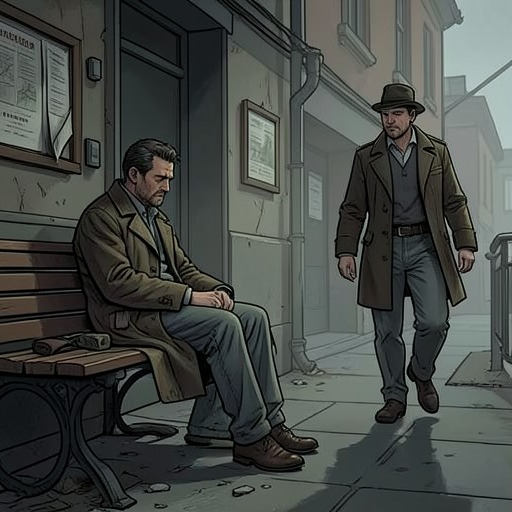
The change in the Alien narrator’s perception is tested in his encounters with Gulliver Martin. He finds Gulliver alone on a pavement beside terraced houses facing a park, away from school and trying to hide behind his hair. The narrator follows Newton’s attention to the boy and calls out to him. The scene places Gulliver’s vulnerability in ordinary surroundings, before the greater danger of his later crisis.
On the roof, the narrator sees Gulliver sitting by the gutter rail with his knees drawn to his chest, cold and bedraggled. He no longer regards him as an exotic arrangement of particles, but as a person, and recognizes a connection that is different from the universal physical connectedness he can explain scientifically. The thought of whether he can end Gulliver’s life marks the remaining conflict between calculation and human concern: the narrator can still reason about the situation as a problem, but his recognition of Gulliver as a person has made the decision morally and emotionally charged.
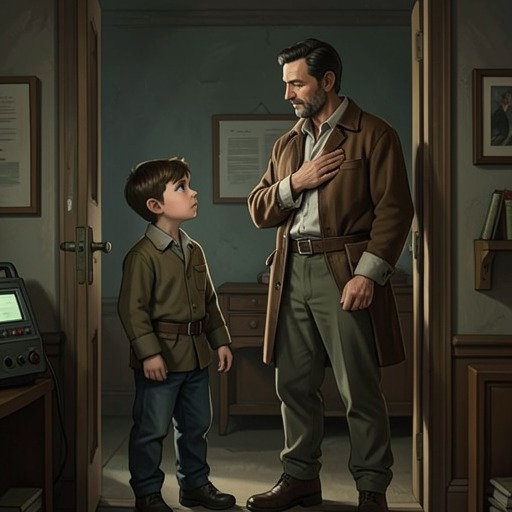
Gulliver recalls swimming with the narrator when he was eight, in France, and being taught to play dominoes. The narrator cannot give the recognition Gulliver seeks, yet answers that he remembers. The exchange brings their shared past into the immediate crisis without erasing the distance between them. It shows how a vulnerable person may reach for continuity and recognition even when the relationship has failed to provide them reliably.
Family pressure and the source of distress
After the roof episode, Gulliver tells the narrator that he had taken twenty-eight diazepam before going out there. The detail makes the danger concrete; it is not merely a figurative expression of unhappiness. When the narrator responds that he would need more, Gulliver looks angry, as if the remark humiliates him by turning knowledge against him. Their conversation exposes how an answer meant as calculation can land as injury when the person addressed is already in crisis.
Gulliver describes the pressures behind his pain. His teachers have read his father’s books and measure him against his father’s reputation, seeing him as a bruised apple fallen from the great Andrew Martin tree. He also recalls being expelled from boarding school, setting things on fire, and feeling that his parents had given up on him. He says that even during holidays his father was absent or the home was made tense by conflict with his mother; in his view, his parents should have divorced years earlier. His account locates vulnerability within relationships and expectations, not in a single isolated act. The narrator initially has no answer, and asks about Gulliver’s band, The Lost, rather than resolving what Gulliver has disclosed.
Mortality, beauty, and change
The narrator’s later life continues to expose him to ordinary forms of bodily and emotional fragility. He catches a cold, develops tinnitus, and eats a poisoned prawn. Such incidents sit alongside the larger transformation in his emotional life: he is lonely, cries at the sight of people, and avoids friendships because closer relationships would bring questions about his past that he does not want to answer. The scarred, purple skin of his hand draws occasional attention, but those who notice it do not pry. His vulnerability therefore includes both what he feels and the concealment required to move through human social life.
At the beach, sunsets become beautiful to him in a way they never were before. He can still describe the scattering of light through clouds and air, but that explanation no longer exhausts what he sees. Red, orange, pink, and occasional traces of violet hold his attention; waves pass over the sand like lost dreams. Sometimes tears blur the view. The sunset becomes an image of human finitude: a day full of color moving irreversibly toward night. Its beauty depends not on permanence but on the passing moment.
This understanding culminates in the narrator’s recognition that he cannot simply continue as he had. Though he is on Earth, he has been living as if he could keep moving forward unchanged; now he understands himself as human, more or less, and human survival as a process of doing, undoing, and doing again. Some actions cannot be undone, but others can be amended. His humanity has come through betraying strict rationality and obeying feeling, and remaining human will require him to make that choice again. Vulnerability is thus not a temporary weakness he can outgrow: it is part of a life shaped by change, irreversible loss, and the possibility of repair.